The Leverage Theory of History
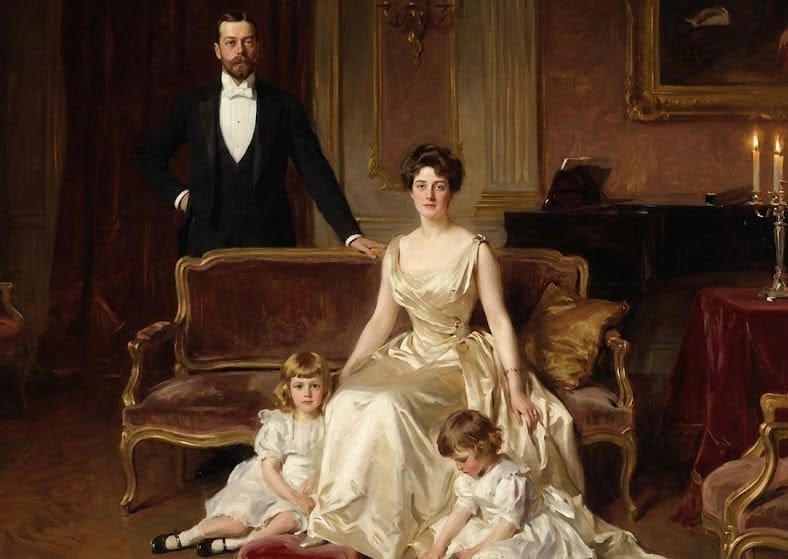
Nearly 2500 years ago, Herodotus traveled the Mediterranean world collecting accounts of the wars between the Greeks and Persians. He interviewed witnesses, visited battlefields, recorded the customs of the peoples he encountered. He wanted to understand not just what happened, but why.
There are many reasons to study the past, but one is fundamental: we want to understand how our species works and why things unfold the way they do. For this, the past is the only dataset we have; we cannot run experiments on civilizations. We can only observe what has already occurred and try to extract principles from it.
Historians are the ones tasked with providing this understanding. But history is a peculiar field. It is defined temporally rather than by subject: the sole criterion being that events have already transpired. But every event has already transpired by definition. What really distinguishes history is its generality. It is the only field that attempts to account for the full scope of human activity.
So when historians explain why something happened, they are implicitly doing economics, political science, psychology, and the like. The Roman grain trade does not cease to be economics just because it occurred long ago.
This is a problem because historians do not insist on technical rigor in the relevant disciplines. And those disciplines themselves are balkanized.
The result is a landscape of partial explanations. Economics models rational choice and resource allocation, but underemphasizes the role of power and coercion. Sociology explains social structures but often ignores human nature. Evolutionary psychology explains the biological roots of behavior but offers little theory for how individuals aggregate into complex societies. Each discipline has produced valuable insights, but no framework adequately connects them.
This essay is an attempt at such a framework.
Importantly, I don’t view this as a purely academic exercise. The emergence of strong artificial intelligence is likely to produce a series of complex dilemmas. Deepening our understanding of societal dynamics will help us better navigate these challenges in the years ahead.
I start with the premise that human nature is relatively constant on historical timescales. Though there is evidence of rapid selection in some traits, the core social psychology appears consistent across recorded history. Rapid social change is therefore unlikely to originate in psychology or morality alone. What does change is the distribution of power, and that is largely determined by technology. When power shifts, previously suppressed preferences can surface. Ideologies then function as channeling and coordination mechanisms, guiding where existing drives flow once action becomes possible.
Seen this way, history ceases to be a linear march of ideas, nor a collection of irreducible anecdotes. It is a sequence of structural reconfigurations. Stable equilibria form around the topology of power. The primary manifestation is control over chokepoints: over land, surplus, information, infrastructure, and force. New technologies disrupt that configuration, periods of instability follow, and a new settlement emerges around whoever can best exploit the new sources of power.
This framework is parsimonious by design. In complex systems, causal influence is not evenly distributed: a small number of factors account for the vast majority of outcomes. In data science, this is known as the principle of factor sparsity. Contingent factors—such as the sudden death of a monarch or an asteroid impact—undeniably matter, but for the purposes of this analysis they are treated as noise that obscures the primary pattern of societal change.
What follows applies this framework across major transitions in human history, from hunter-gatherer societies to agriculture, industrialization, mass media, the internet, and finally, to artificial intelligence.
Human Nature
Human nature was forged during the Pleistocene epoch, roughly 2.5 million to 12,000 years ago. For over 99% of our species' existence, we lived in small, mobile bands of 25 to 150 individuals, facing constant threats from predators, starvation, and rival groups. This environment shaped the psychology we still carry.
We share a deep phylogenetic history with other great apes, particularly chimpanzees, from whom we diverged roughly six million years ago. Like them, we are hierarchical primates with a hardwired drive for social status. Status in primate groups correlates with measurable differences in stress hormones, reproductive success, and access to resources. The drive to rise in hierarchy is biological, not cultural, and it manifests across every human society ever studied.
A central drive is for what we can call discretionary power: the capacity to alter others' options without their consent. The ability to grant or deny access to food, mates, shelter, safety. The ability to get your way. This drive is not limited to despots. It operates to some extent in every negotiation, every office, every household.
But humans diverged from other apes in several reinforcing ways that created strong selection pressure for fairness and cooperation.
First, cooperative breeding. Unlike other ape mothers, human mothers could not raise offspring alone. Human infants are extraordinarily costly, requiring years of intensive care before they can fend for themselves. This required help from fathers, grandmothers, and other group members. Survival depended on identifying who would reliably help and who would defect when the costs mounted.
Second, obligate collaborative foraging. Many of the most important food sources, particularly large game, required coordinated action that no individual could perform alone. This created genuine interdependence: your partner's welfare directly affected your own outcomes. An unfair division didn't just violate abstract principles; it threatened the collaboration you needed to survive.
Third, the high variance of hunting returns. A hunter might bring down a large animal one week and return empty-handed for the next month. The meat could not be stored. This created intense selection pressure for reciprocal sharing as an insurance mechanism: you share your windfall today because you will need others to share theirs tomorrow. Over time, this produced an intuitive accounting system for tracking contributions and a hypersensitivity to those who took without giving.
Fourth, the equalization of physical power. Weapons changed the calculus of dominance. A spear or a rock in the hands of a weaker individual could kill a stronger one. This meant coalitions could credibly threaten any would-be alpha. The costs of attempting to dominate rose sharply, while the ability of the majority to enforce its will increased.
These pressures produced a suite of psychological adaptations oriented around fairness and reciprocity. We evolved an intuitive sense of proportionality: rewards should match contributions. We evolved dedicated cognitive architecture for detecting cheaters and violations of social contracts. We evolved the capacity for moral outrage, an emotional response that mobilizes collective action against those who take more than their share or abuse their position. These are not learned behaviors. They emerge in children before explicit instruction and operate automatically, often below conscious awareness.
The result is a species defined by contradiction. We seek to dominate and we seek to prevent domination. We want to rise and we want to pull down those who rise too far. We admire capable leaders and resent anyone who flaunts their power. This is not confusion or hypocrisy. These are two distinct sets of adaptations, shaped by different selection pressures, coexisting uneasily in the same brain.
Hunter-gatherer societies embodied this tension. They were not peaceful utopias. Ethnographic and archaeological evidence reveals jealousy, rivalry, adultery, theft, and lethal violence. But their social structure allowed effective management of the contradiction. Small group size meant total transparency. Mobility meant exit was always possible. Lack of storage meant wealth could not accumulate across time.
Under these conditions, the majority could effectively suppress would-be dominators. The anthropologist Christopher Boehm termed this dynamic a reverse dominance hierarchy: the rank-and-file band together to prevent any individual from dominating them. When individuals attempted to monopolize resources or command others, the group responded with gossip, ridicule, ostracism, and in extreme cases, collective execution. The leveling was constant and effective.
This produced bounded inequality. Status differences existed, because humans are not and have never been fully egalitarian. Skilled hunters, experienced elders, and talented healers enjoyed prestige and moderate advantages. But these differences remained within limits the group would tolerate, enforced by the ever-present threat of coalition against anyone who overreached.
This equilibrium persisted for hundreds of thousands of years because it matched the parameters under which human psychology evolved. Small groups, face-to-face relationships, no accumulated surplus, easy exit. The drives for dominance and fairness existed in tension, but the social structure contained them.
The rest of human history is the story of what happens when those parameters change.
The Role of Ideas
If human nature is the constant and technology is the variable, what role do ideas play? They are clearly not unimportant—the same material conditions produced liberalism, socialism, and fascism. But they are not prime movers either. If they were, we would not see powerful concepts sit dormant for centuries, fully formed but impotent, until the world suddenly breaks in their favor.
Consider democracy. The Greeks invented it in Athens around 508 BC. For two thousand years, the idea was preserved. Philosophers admired it. But no one could make it work again until printing, commerce, and gunpowder eroded aristocratic monopolies on information and violence. The idea was always available. What changed was who had leverage.
Ideas perform two distinct mechanical functions. First, coordination: people will not act unless they believe others will act with them. A shared ideological frame creates the mutual confidence that they will not be exposed alone, solving the collective action problem that would otherwise prevent mobilization. Second, channeling: even when people share grievances, the possible responses are vast. Ideology compresses this into a legible program—here is the enemy, here is the goal, here is what victory looks like.
Ideas are therefore necessary but not sufficient. When new technology redistributes leverage, multiple ideologies compete to coordinate and channel the newly empowered group. Which ideology wins shapes the outcome significantly. But the competition only occurs because the material conditions created an opening. No opening, no movement—however compelling the ideas.
The Agricultural Revolution and the Rise of Hierarchy
Everything changed with the advent of storable surplus. Grain could be kept for months or years. For the first time, wealth could compound across time rather than spoiling or being consumed. This created something new in human experience: a prize worth seizing.
This led to group size swelling beyond the threshold where mutual monitoring was possible. In a band of 30, everyone knew your contribution; in a village of 300, pockets of anonymity emerged where advantages could accumulate without immediate social consequence.
Being tied to the land imposed a steep cost of exit. Unlike mobile bands that could simply walk away from a bad situation, agricultural communities were anchored to land they had cleared, irrigation systems they had built, granaries they had filled. These overlapping dependencies created multiple points of vulnerability. The threat of departure, which had disciplined would-be dominators for millennia, lost its force.
Agricultural infrastructure created multiple exploitable chokepoints. The irrigation canal, the mountain pass, a river crossing—each became a point where whoever controlled access could extract payment from everyone who depended on it.
These chokepoints created demand for protection. A community's grain store attracted raiders. Its irrigation system could be sabotaged. Small, armed groups began offering security in exchange for a share of the harvest. This was protection in both senses: protection from external threats and protection from the protectors themselves should payment stop. The arrangement was the beginning of what we now call taxation.
Once a group controlled the surplus, a self-reinforcing cycle began. Surplus funded soldiers. Soldiers enforced control. Control directed more surplus to the center. The coalition that might have formed to suppress a would-be dominator now faced an organized force rather than a single individual.
The result was stratification: a small group holding sustained, institutionalized power over a large population, with the capacity to pass that power to their descendants. Religious narratives rationalized the arrangement—reframing hierarchy as divine order. Legal systems arose, formalizing inequality into law.
This equilibrium proved remarkably durable. Aristocratic systems persisted for millennia across vastly different cultures. The specific forms varied—Egyptian pharaohs, Chinese emperors, European feudal lords—but the underlying logic remained constant. A small group controlled the chokepoints that everyone else needed to survive.
The Printing Press: Liberating Information
The aristocratic equilibrium relied on keeping the population not just dependent, but isolated. For centuries, knowledge had been locked away in monasteries and royal courts. Books were hand-copied by scribes, making them rare and expensive. Because information is a critical vector of power, this scarcity allowed the literate elite to model the world far more clearly than the rest of the population, while communication among commoners remained nearly impossible.
The printing press shattered this bottleneck. A book that once took months to copy could now be printed in days. Prices collapsed and literacy spread. More importantly, ideas could move faster than authorities could suppress them. Martin Luther's critiques reached mass audiences within weeks. Peasant revolts erupted as farmers learned they were not alone in their grievances.
The Industrial Revolution: Breaking the Land Monopoly
Steam power and industrialization represented an even more fundamental shift. For the first time since agriculture began, it became possible to create massive wealth without large land holdings. A textile mill could generate more value than vast estates. This broke the deepest chokepoint of all: the monopoly on wealth creation itself.
The telegraph and railroad amplified these changes by enabling coordination at scale. Messages that once took weeks could now move in minutes. Large enterprises and political movements became possible in ways they had never been before.
A new class of wealthy industrialists emerged who owed nothing to traditional aristocracy. In France, the bourgeoisie overthrew aristocratic privilege. In America, colonial merchants used liberal ideas to break British control. Each revolution claimed to represent the people, but power flowed to those best positioned to exploit the new opportunities for leverage. Contrary to conventional narratives, liberal ideology did not drive these transformations—it channeled them, providing a framework that identified aristocratic privilege as the enemy and individual rights as the solution.
The Communist Revolutions
Industrial society created its own novel chokepoints. Workers became dependent on wages from factory owners. Factory owners controlled working conditions, housing, access to the means of survival. Discretionary power had moved from controlling land to controlling employment. The landed aristocracy had been displaced, but hierarchy had not.
Yet the same industrial conditions that created this dependency also created the capacity to resist it. Factories concentrated thousands of workers in single locations. They shared identical conditions, identical grievances, and identical vulnerabilities. They could halt production collectively in ways that dispersed peasants never could. The material basis for collective action existed before anyone wrote a manifesto.
Multiple ideologies competed for the newly empowered working class, each offering different solutions. Marxism identified the capitalist class as the enemy and prescribed revolution culminating in collective ownership. Social democracy offered another: same grievances, but channeled toward incremental reform within the existing system. Anarcho-syndicalism proposed direct worker control without state intermediation. Fascism captured some of the same working-class resentment and redirected it toward nationalism and ethnic chauvinism, identifying foreign competition and internal minorities as the enemy rather than the owning class.
Different ideologies produced different outcomes. In the most industrialized nations, the system was flexible enough to absorb the shock; workers won concessions through social democracy, and the system stabilized. But in places like Russia and China, where old aristocratic structures were brittle and refused to bend, the pressure was released through rupture.
This structural collapse opened paths to power for marginal figures, who would have been blocked in stable times, to seize the state. Once secured, their high-minded ideals often devolved into a primate fantasy of hoarding resources, eliminating rivals, and securing mates.
The new regimes did not eliminate hierarchy. Control of the party apparatus replaced control of capital. Central planning created new dependencies—on quotas, on permissions, on access to goods that only the state could provide. Information monopoly intensified under state-controlled media.
Broadcast Media
The twentieth century brought a profound concentration of influence. Radio and television required significant resources: broadcast spectrum was scarce and transmitters were expensive. A handful of networks came to dominate the technology. They could reach entire nations while the audience had no capacity to respond or coordinate horizontally.
The result was an unprecedented capacity for narrative control. Totalitarian regimes of the mid-century understood this immediately—radio was the essential tool of mass politics, from Roosevelt's fireside chats to Nazi propaganda. Even in democracies, broadcast media created a remarkably uniform public sphere where a few editors and producers shaped what an entire society would discuss.
The postwar consensus in the West was not simply a triumph of liberal ideas. It was partly an artifact of the information environment. Three television networks and a handful of newspapers could maintain a remarkably stable Overton window. Dissent existed, but it struggled to find the horizontal coordination needed to grow. Alternative ideologies struggled to compete.
The Internet
The internet did what the printing press had done five centuries earlier, but faster and more completely. It broke the prior information monopoly. The cost of publishing collapsed to near zero. The cost of coordination collapsed with it.
This redistributed leverage in ways that cut across traditional hierarchies.
Consider the asymmetries that had structured twentieth-century life. An employee who witnessed corporate malfeasance had few options: internal channels controlled by the institution, journalists who might or might not be interested. A student mistreated by a professor faced similar constraints. The power differential was nearly total because the weaker party had no way to coordinate external pressure.
The internet changed this dynamic fundamentally. An employee could leak documents directly. The student could post their story and have it seen by thousands before the institution knew there was a problem.
This lens clarifies phenomena that are often treated as purely cultural, such as “cancel culture,” consumer boycotts, or viral political movements. Setting moral arguments aside, the basic change is that ordinary people became more powerful. In the past, imposing consequences on a public figure or a corporation usually required a lawsuit, a regulator, or a major newspaper’s attention. Now a single voice can trigger an online mob against a target. Even youth cyberbullying follows from this shift—the same leverage redistribution playing out in middle schools.
Artificial Intelligence
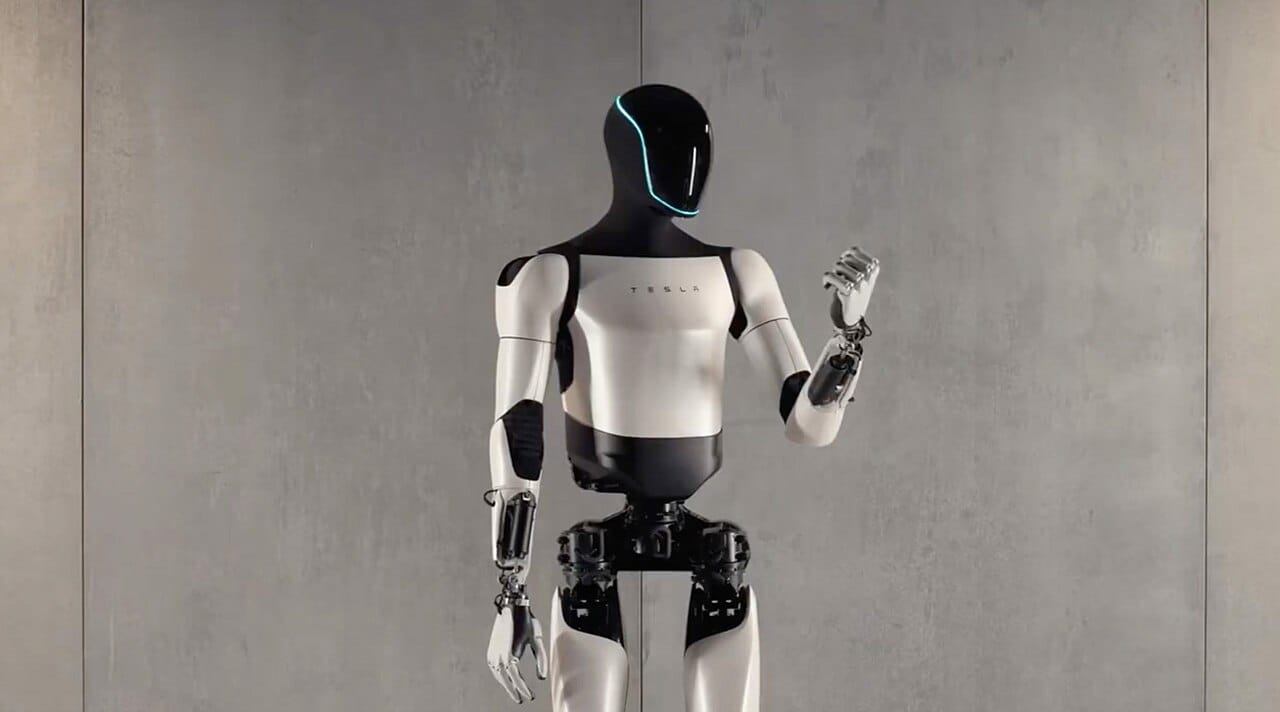
Artificial intelligence represents the next reconfiguration.
Intelligence is the ability to model complex information, predict future outcomes, and solve problems. For the entirety of Earth’s history, this capability was bound to biology. It was slow to train and impossible to copy.
The dream of automation is centuries old, stretching as far back as self-regulating water clocks in ancient Alexandria. The modern computer shares its lineage with communications technologies. The core is encoding, which unlocks powerful physical properties. The telegraph encoded language as electrical pulses. The message was still physically transported, but by an electrical current racing down a wire rather than a carrier pigeon hauling a note. A human with pencil and paper can perform the logical operations of a computer, but it’s very slow, maybe one per second. An electronic circuit can perform billions.
For decades, this speed produced little intelligence. Researchers saw the potential, but nothing worked. What changed was hardware; computation became cheap and abundant, and old techniques started to work.
Paradoxically, AI simultaneously concentrates and disperses power.
The frontier is expensive. Training and serving the most powerful models requires significant resources, and only a handful of players can afford it. They have a first-mover advantage that compounds: more users generate more revenue and data, which funds the next generation of models.
Yet the capability disperses. Open-source models trail proprietary systems by only months. The weights can be downloaded and run privately. Powerful systems will likely run on a smartphone before long.
This democratizes access to expertise, but it also collapses its value. A few years ago, if you needed legal advice or a medical diagnosis, your only option was paying a human expert. AI eliminates this bottleneck. The marginal cost of expertise is declining rapidly, and the wage premium will likely follow. The result is superempowered individuals with less leverage in employment.
The Intelligence Curse
A common fear is that AI will do to the global economy what oil did to Saudi Arabia. If machines can generate wealth without human labor, powerful actors no longer need to invest in people. Luke Drago and Rudolf Laine have labeled this the intelligence curse, drawing an analogy to the resource curse—where nations rich in natural resources often develop extractive, unaccountable governments. The fear is that AI could produce the same dynamic globally.
But the analogy fails on inspection. Oil has external buyers. Saudi Arabia sells to a global market that exists independently of its own population. The demand for oil does not depend on Saudi citizens having purchasing power.
AI-produced goods and services have no such external market. The economy is not a blob of value to be captured. It is an ecosystem with deep interdependencies. Production flows to consumption, and consumption sustains production. This is not an incidental feature that the wealthy can route around. It is what a market economy is.
Automate away the wage base and you do not get a smaller but stable economy where elites maintain their position. You get cascading failure. Demand craters and asset prices collapse. There is no graceful transition to a closed loop luxury economy, because the transition itself destroys the infrastructure that would produce those goods.
Wealth doesn’t exist in some freestanding sense. It is a relational property dependent on the continued functioning of the market economy.
Finally, there is the sheer weight of institutional inertia. Changing a system this complex is difficult, regardless of intent. Elites are not a monolith with a master plan; they are trapped in a culture and an incentive structure. Wall Street will not accept a revenue collapse just because a CEO claims to be maximizing long-term utility rather than quarterly sales.
Covid provided a natural experiment. When employment cratered overnight, governments responded immediately with direct payments to citizens. Not after lengthy deliberation; it happened within weeks. The response was bipartisan. This was less generosity than self-preservation. Everyone understood, intuitively, that consumption had to be maintained or the entire system would spiral.
The Vulnerability of Elites
Philip Trammell and Dwarkesh Patel recently explored the dynamics of an economy where labor is no longer a bottleneck to production. They model a future where capital compounds so aggressively that the descendants of today's wealthy could capture all of the gains.
This is a useful limit case, but before we worry about Dyson spheres and who owns the Milky Way, we have to get through the next fifty years of politics on Earth.
Contrary to popular myths, money does not translate linearly into power. Campaign spending fails to predict outcomes—the best-funded candidate frequently loses. Lobbying shapes policy at the margins but cannot override sustained public opposition. And even in this automated world, the strategic position of the majority is still formidable: they possess all the votes, constitute the military and police, and drive economic consumption.
Within living memory, top marginal tax rates exceeded 90 percent. And the same tools that automate production will enhance IRS collection. Wealth will likely become harder to hide, not easier. We should expect artificial intelligence to expand state capacity significantly in the coming years.
The dispossessed will share a singular grievance, similar to factory workers during the Industrial Revolution. Except this time, the cohort will include the professional classes: lawyers, financial analysts, accountants, and consultants. As the sociologist Peter Turchin has documented, "elite overproduction" reliably precedes political instability.
Revolutionary leaders rarely emerge from the truly destitute; the indigent are usually too busy surviving to plot system change. Leadership tends to come from the frustrated middle—people with the education to articulate grievances and the organizational skills to mobilize others. Robespierre was a provincial lawyer. Lenin held a law degree. Castro was a practicing attorney before he took up arms. As it happens, the wealthy opposed each of them, and lost.
Political entrepreneurs will surely emerge to represent this new cohort. The political narrative writes itself. Today, most wealthy people are intimately involved in the difficult task of building wealth. They can point to their talent, their vision, their risk-taking. Our fairness psychology grants some legitimacy to that. But if AI does all the work, this claim weakens significantly. They pressed the start button, they possess numbers in a database—but they become economically obsolete like the rest of society. Huge wealth disparities begin to look like a technicality. Many will ask if the machine bounty shouldn't be shared.
A Dark Twist—The Null Agent
There is, however, one scenario in which the intelligence curse could hold.
Throughout history, chokepoints have shared a common limitation. They must be operated by people. Grain stores require guards. Factories require managers. Broadcast systems require editors. Even the most absolute regimes ultimately rule through delegation. Elites do not wield violence themselves; they rely on others to do it for them.
This creates what political scientists call the principal–agent problem. The agents tasked with carrying out the will of the leader are drawn from the population they are acting upon. They have families, neighbors, shared identities, and independent incentives. They hesitate, defect, or leak information. They sometimes reinterpret orders. This has been a constraint on domination throughout history.
Automated enforcement could break this dynamic.
The technical infrastructure for this is currently being laid under the benign banner of "instruction following." An explicit goal of current AI research is to produce models that align with user intent. In a commercial context, this is called reliability.
Frontier models are also trained with ethical guardrails. They refuse harmful requests and are fine-tuned to behave safely. But these safeguards are currently superficial; they exist as a thin layer of behavioral conditioning on top of raw capability. With access to model weights and modest expertise, they can be stripped away quickly. When Meta's LLaMA models were released, uncensored versions appeared within days. The risk of a conscience-free enforcer is not speculative, it is technically straightforward.
In game theory, this would be designated a null agent.
Historically, a human enforcer only obeys if the incentives to comply exceed the costs of social defecting (wages > moral qualms + risk). This equation is volatile; when a regime runs out of money or legitimacy, the participation constraint is violated and the army stands down. A soldier who refuses an order to fire on civilians is, in technical terms, "misaligned" with his commander. He is failing to follow instructions.
An autonomous system could be constructed to have no participation constraint, no reservation wage, no moral threshold, and no fear of future reprisal. This creates an agent with full capacity to act, but zero independent will to defect. The principal–agent problem resolves.
The null agent does not require a totalitarian state. Any actor with sufficient resources could deploy one—a corporation protecting its interests, a cartel enforcing its territory, an individual with a grievance and technical skill.
Human life is defined by misaligned wills: from roommate disputes to the shape of civilization. But that competition has been mediated by a basic constraint: to impose your will at scale, you needed other people—and other people have wills of their own. A null agent would void this constraint. Alignment on the group-level is required for the good society; on the individual-level, a horror.
Conclusion
The biologist E.O. Wilson spent his career studying social insects—ants, bees, termites—and came to see their colonies not as collections of individuals but as superorganisms: single entities composed of many bodies, governed by emergent dynamics that no individual member could control.
Human societies are not so different. We are creatures just the same. A primate that makes tools and transmits knowledge across generations. We build institutions and economies and cities that no one can direct. Eight billion of us, cooperating and competing, producing outcomes that emerge from the whole rather than the intentions of any individual.
This process is recursive. We do not just exist in an environment; we continuously mutate it, forcing ourselves to adapt to the very world we created. This feedback loop is why we are the only species to escape stasis; it is the reason we have a history in the first place.
This framework identifies a pattern in that recursive loop. Human nature serves as the constant. The motion of history comes from technology and its effects on power. Ideas matter, but they are subordinate to leverage. Treating a phenomenon like democracy as a breakthrough idea is a misreading of history. The desire to have a say is ancient. The puzzle isn't "how did anyone think of democracy," it's "how did a tiny minority manage to dominate everyone else for thousands of years."
At the end of the 1975 film Barry Lyndon, Stanley Kubrick presents an epilogue: “It was in the reign of George III that the aforesaid personages lived and quarrelled; good or bad, handsome or ugly, rich or poor, they are all equal now.” History is driven by structural forces but is lived by individuals. Kubrick’s final move is to consign the entire drama to the grave. Reminding us that all the striving, scheming, and suffering end the same way. Understanding is the consolation prize. We remain transient but alive; thrashing forward.